If you're shopping for a 2026 Jeep Wrangler in British Columbia, the trim you choose makes a bigger difference than it does on most vehicles. From the trail-ready base Sport to the V-8-powered Moab 392, each trim is built for a different kind of adventure. The 2026 Wrangler lineup runs from daily-driver-friendly two-doors to dedicated rock crawlers. Every trim shares removable doors and a fold-down windshield, but the differences in power, off-road hardware, and comfort are significant.
This guide breaks down what each trim includes and who it suits.
2026 Jeep Wrangler Trim Overview
|
Trim
|
Engine
|
Key Differentiator
|
|
Sport / Sport S
|
3.6L V-6 (285 hp)
|
Entry point, daily-driver friendly
|
|
Willys
|
3.6L V-6 (285 hp)
|
Off-road upgrades, heritage styling
|
|
Sahara
|
3.6L V-6 or 2.0L turbo
|
On-road comfort, tech features
|
|
Rubicon / Rubicon X
|
3.6L V-6 or 2.0L turbo
|
Hardcore off-road, locking diffs
|
|
Moab 392
|
6.4L V-8 (470 hp)
|
Maximum power and performance
|
Sport and Sport S: The Daily-Driver Wrangler
The Sport and Sport S are built for buyers who want Wrangler capability without the hardcore off-road hardware. Both come standard with the 3.6-litre Pentastar V-6, producing 285 hp and 260 lb-ft of torque, paired with either a six-speed manual or an eight-speed automatic. Fuel economy for the four-door automatic is rated at 13.4 L/100 km combined — competitive for a body-on-frame 4x4.
The Sport handles city commutes, weekend camping trips, and light trails. The Sport S adds convenience features including power windows and remote keyless entry. If you plan to use your Wrangler as a daily driver in Metro Vancouver or along the Sea-to-Sky corridor, the Sport S is the more practical starting point.
Willys: Heritage Meets Trail Capability
The Willys is for buyers who want more off-road capability than the Sport provides without stepping into Rubicon territory. This trim adds 33-inch BFGoodrich all-terrain tires, rock rails, a rear locker, and a limited-slip rear differential, while keeping the 3.6-litre V-6 (285 hp / 260 lb-ft) powering it. Heritage styling cues — gloss black grille, Willys decals — pay tribute to the original military Jeeps.
For BC drivers planning to explore the backcountry between Pemberton and Gold Bridge, or logging road adventures on Vancouver Island, the Willys is a strong middle ground before you invest in full Rubicon hardware.
Sahara: Comfort-Focused Wrangler
The Sahara is for buyers who want Wrangler style and open-air freedom but prioritize on-road comfort over extreme off-road capability. It's available with either the 3.6-litre V-6 (285 hp / 260 lb-ft) or the 2.0-litre turbocharged four-cylinder (270 hp / 295 lb-ft). The turbo engine delivers stronger low-end torque and generally improved fuel economy, making it a good choice for highway driving between BC cities.
Inside, the Sahara includes upgraded interior materials and more sound insulation for a quieter cabin. If you spend most of your time on paved roads and want the Wrangler experience without a punishing ride, the Sahara offers the best balance in the lineup.
Rubicon and Rubicon X: Built for Serious Off-Roading
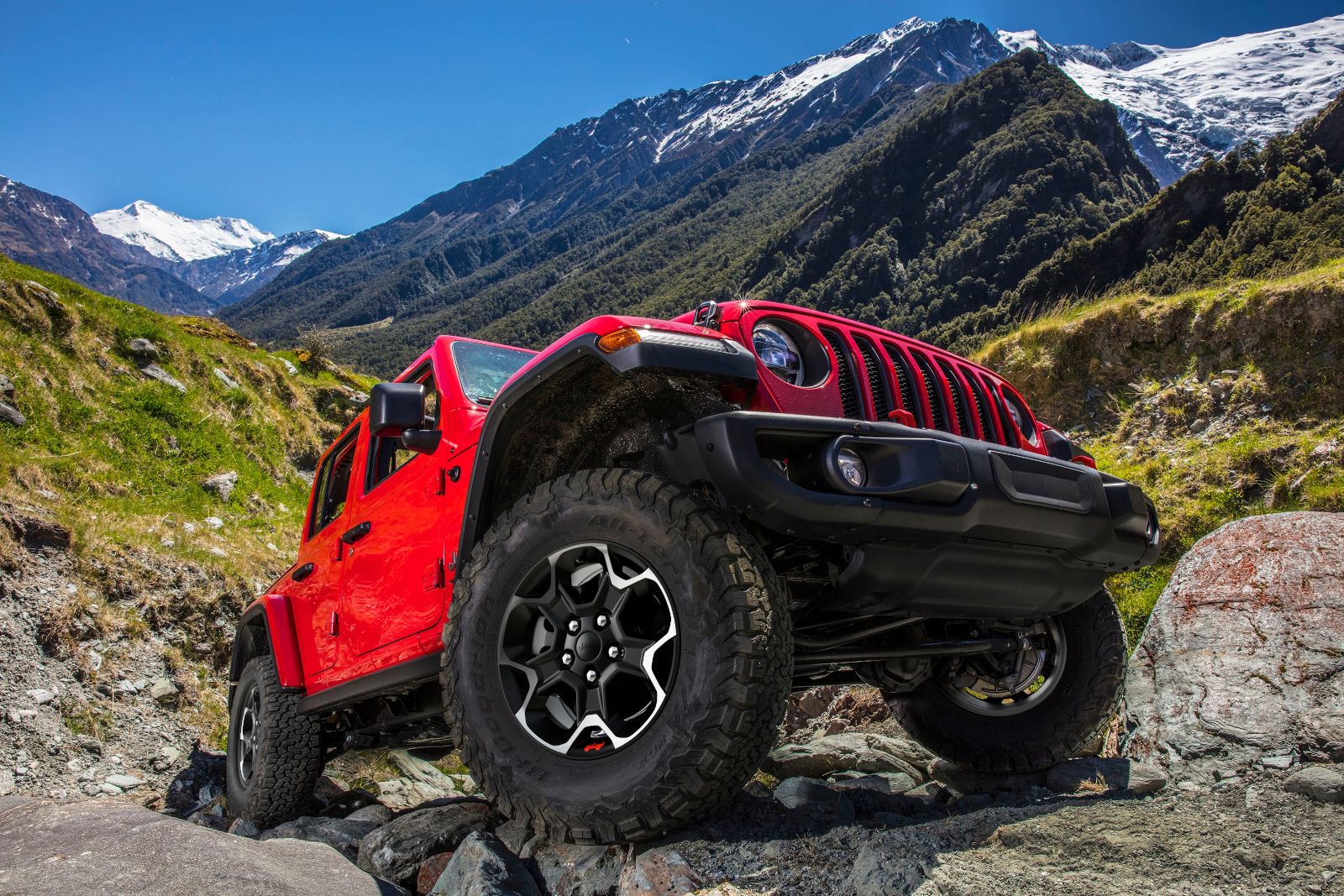
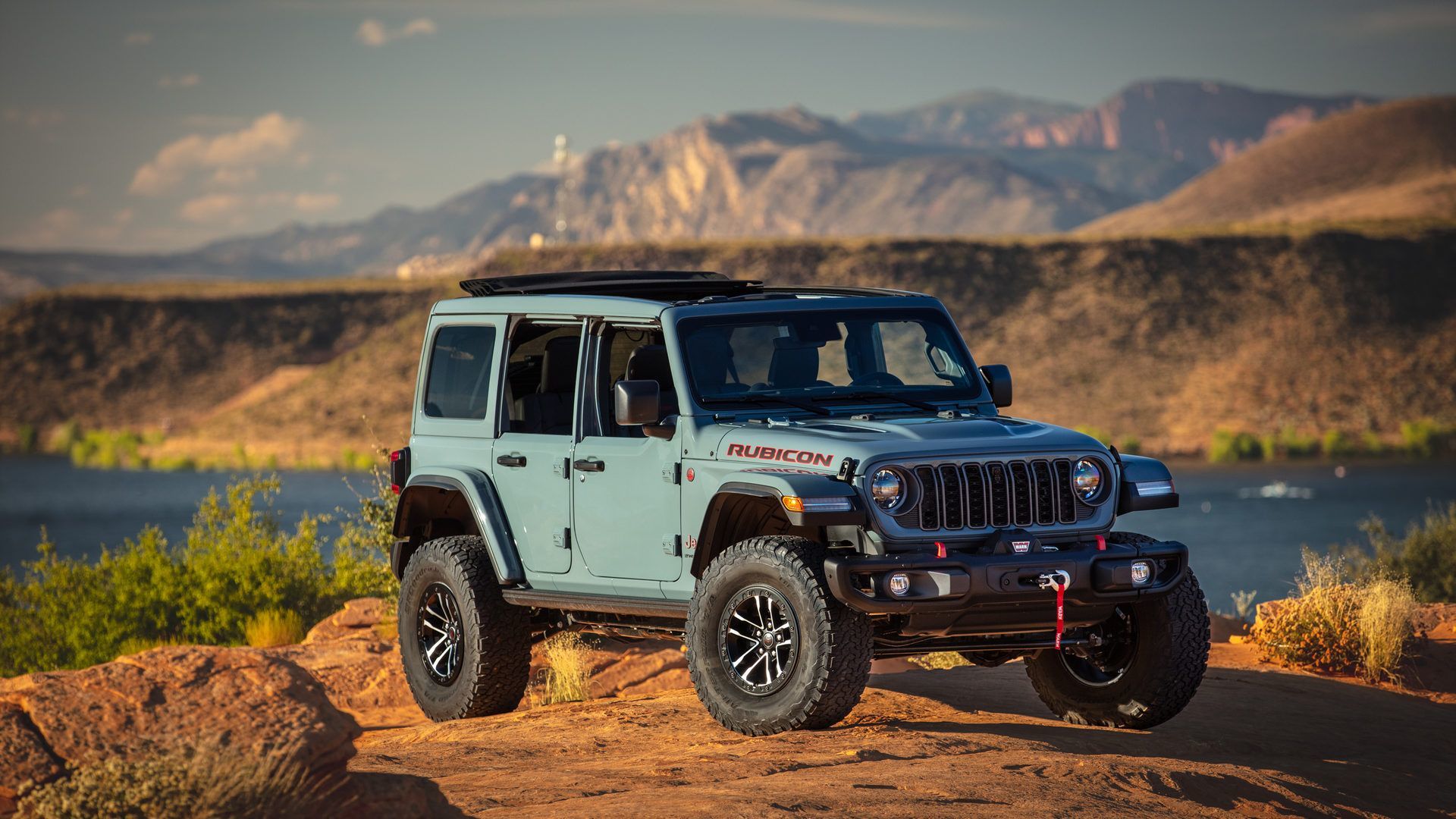
The Rubicon is for buyers who plan to tackle BC's toughest trails — think the Chilcotin backcountry, the Duffy Lake Road, or Vancouver Island's remote logging networks. This trim includes locking front and rear differentials, a disconnecting front sway bar, and 33-inch all-terrain tires. The 4:1 low-range transfer case gives you maximum mechanical advantage on steep, rocky terrain.
The suspension is tuned for articulation rather than pavement comfort, so the ride is noticeably firmer on-road. Available with the 3.6-litre V-6 or the 2.0-litre turbo, the Rubicon with the V-6 and 4.10 axle ratio can tow up to 2,267 kg (5,000 lbs) — enough for a boat or a camping trailer.
The Rubicon X adds the Xtreme 35 Package with 35-inch BFGoodrich tires, beadlock-capable wheels, a 4.56 axle ratio, and a 38 mm factory suspension lift, along with Nappa leather seating and a body-colour hardtop.
Moab 392: V-8 Power and Performance
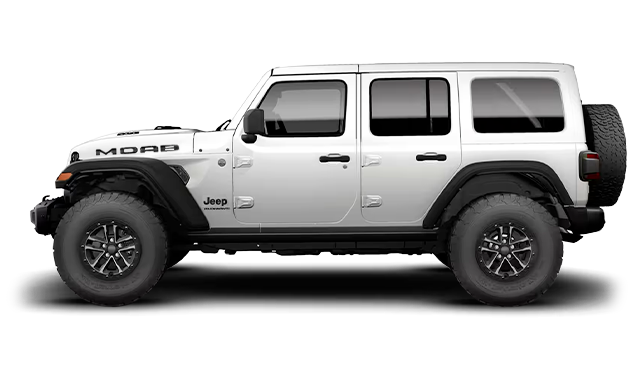
The Moab 392 is the most powerful production Wrangler built to date. The 6.4-litre V-8 produces 470 hp and 470 lb-ft of torque — paired with 17-inch beadlock-capable wheels, 35-inch all-terrain tires, a 4.56 axle ratio, and a 2.72:1 Selec-Trac full-time transfer case. The cold-air intake hood with water separator is a functional feature that improves airflow and adds water fording confidence.
Inside: heated black Nappa leather seats, a premium Alpine audio system, and a 12.3-inch touchscreen with navigation. Optional equipment includes the Sky One-Touch powertop and an 8,000 lb Warn winch.
Fuel economy is not the priority here. The Moab 392 is a performance vehicle — one that handles daily driving, BC highway runs, and serious trail use without compromise.
Key Specs Across the Lineup
- 3.6-litre V-6: 285 hp, 260 lb-ft of torque
- 2.0-litre turbo I-4: 270 hp, 295 lb-ft of torque
- 6.4-litre V-8 (Moab 392): 470 hp, 470 lb-ft of torque
- Maximum towing (when properly equipped): 2,267 kg (5,000 lbs)
- All trims: removable doors, fold-down windshield
Which Wrangler Is Right for You?
If you're using your Wrangler as a daily driver with occasional weekend adventures, the Sport S or Sahara is the right fit. For regular backcountry trail use across BC's varied terrain, the Willys or Rubicon provides the hardware you need. If you want maximum power and capability in a single package without compromise, the Moab 392 is the top of the Wrangler lineup.
Every 2026 Wrangler comes with the open-air freedom that makes this vehicle iconic. The differences come down to how much off-road hardware you need and how much pavement comfort matters to you.
Visit Ensign Pacific Chrysler Dodge Jeep Ram to compare the full 2026 Wrangler lineup in person and find the trim that matches your BC driving life.